Monday, February 16, 2026

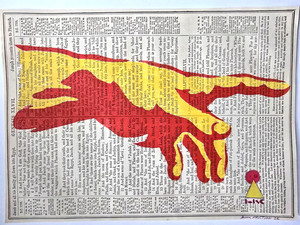
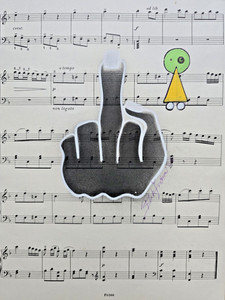
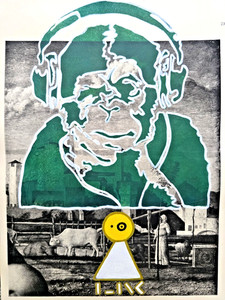
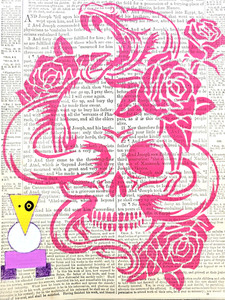
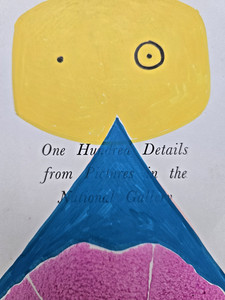
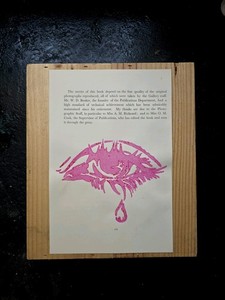
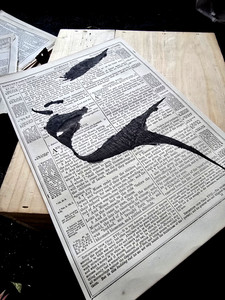
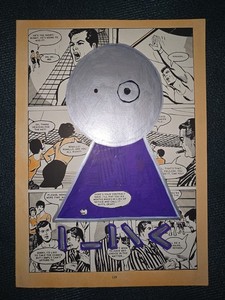
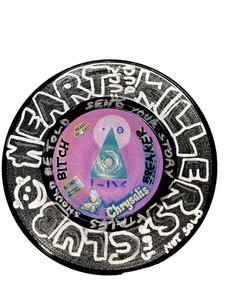
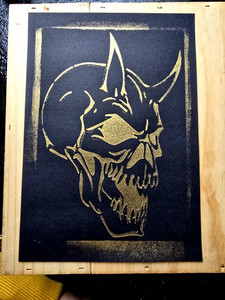
Dinfant Sigil (Blink Friction / BOI) A tactile sigil artefact from the Book of Immersion universe


  • “A tactile sigil artefact from the Book of Immersion universe.”

  • “Part of a shared symbolic language embedded across found objects.”

  • “Material memory, not reproduction.”

  • “Designed to age, not to remain pristine.”

  • “Best displayed with space — box framing recommended.”


  • Dinfant Sigil (Blink Friction / BOI)

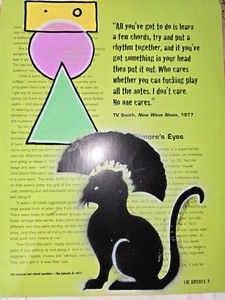
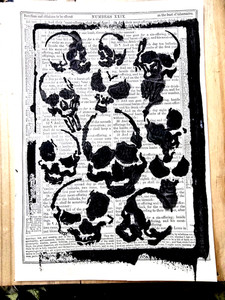
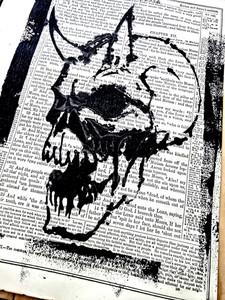
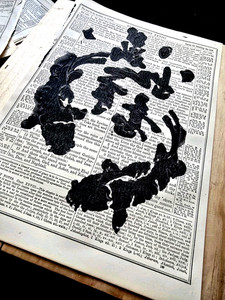
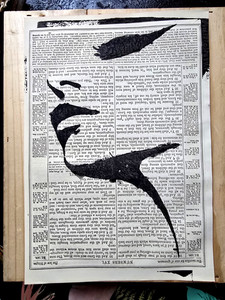
    This work features the Dinfant Sigil, a symbolic mark drawn from the narrative universe of The Book of Immersion. Within the BOI cosmology, Dinfants are discarded child-like machines — orphaned intelligences who form their own societies, rituals, and mythologies from remnants of lost systems. The sigil functions as both identity and signal: a quiet declaration of presence, survival, and shared memory.

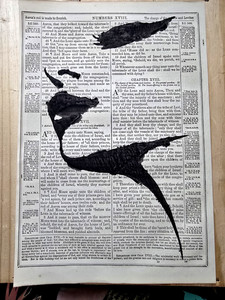
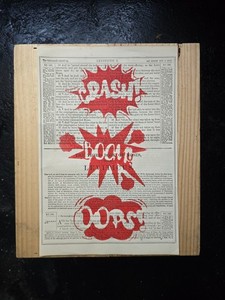
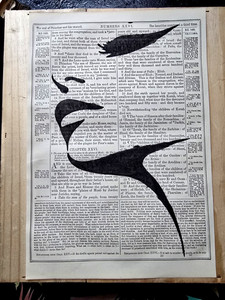
    The sigils used throughout The Book of Immersion are not illustrative logos but fragments of a working symbolic language. They appear repeatedly across time and strata — scratched into surfaces, daubed onto walls, embedded in detritus — acting as a connective tissue between characters, eras, and parallel realities. In this way, each sigil is less a symbol than a temporal marker, carrying meaning forward through decay, reuse, and rediscovery.

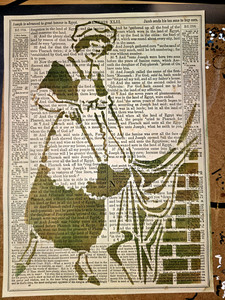
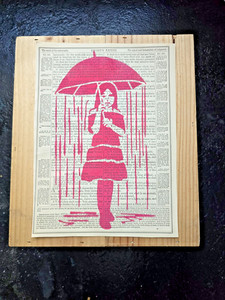
    This philosophy is central to the Blink Friction project. All sigils are executed on found, reclaimed, or historically charged materials, allowing the object itself to participate in the narrative. Time is not simulated; it is present. The substrate bears its own history — stains, fibres, brittleness, marginal text — and the sigil is added as a new layer in an ongoing continuum rather than as a clean interruption.

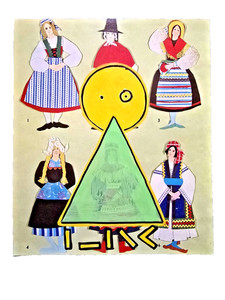
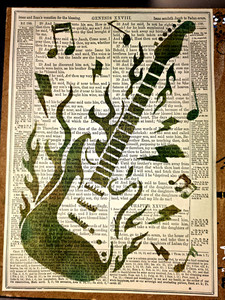
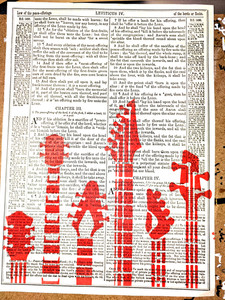
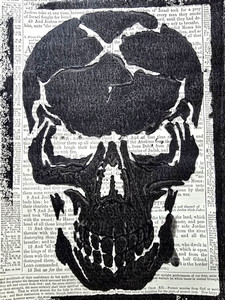
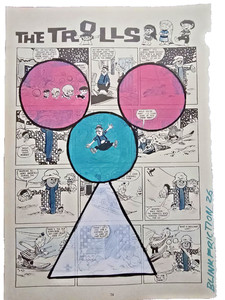
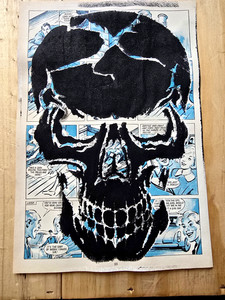
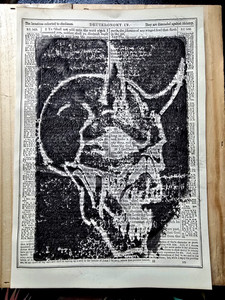
    In this piece, the sigil has been hand-painted directly onto a salvaged book page. The acrylic pigment has subtly reacted with the paper, causing the central area to contract and buckle as it dried. This unplanned physical response is embraced rather than corrected, giving the work a slight relief-like, almost sculptural quality. The surface catches light differently across its plane, suggesting depth and dimensionality that rewards close viewing. For this reason, the work lends itself particularly well to box framing, where shadow and air can be allowed to interact with the object, rather than being pressed flat behind glass.

    The colours and geometry are deliberately restrained yet assertive — balancing childlike clarity with ritual seriousness. As with all Blink Friction sigils, the form is designed to feel simultaneously ancient and futuristic, as if it could belong equally to a forgotten civilisation or a system yet to come.

    Importantly, these works are tactile artefacts, not merely visual ones. They retain the patina of their former lives: the softness of aged paper, the faint unevenness of fibres, and — in this case — a subtle, unmistakable scent reminiscent of an old bookshop or archive. This sensory residue is part of the work’s identity, reinforcing the idea that meaning is carried not only through image, but through material memory.

    Across the Blink Friction project, sigils such as the Dinfant, Cadre, and Freak marks form a shared visual language, appearing across multiple objects, scales, and contexts. Encountered individually, they function as intimate relics; encountered collectively, they suggest a wider, unfolding system — a universe communicating with itself through fragments.

    Each sigil work is entirely unique. There are no editions, no replicas, and no attempts to artificially standardise what is, by nature, unstable, temporal, and alive.


    ABOUT BLINK FRICTION SIGILS

     
    Blink Friction sigils form a shared visual language embedded across reclaimed objects. Each mark appears once, on one surface only. Materials are never cleaned back to neutral — time, wear, smell, and damage are part of the work.

    No two pieces are alike.
    No editions exist.
    Nothing is designed to stay pristine.

    Context Note

    The Dinfant Sigil originates from the narrative world of The Book of Immersion, where symbolic marks appear repeatedly across different strata as a form of non-verbal communication. On the accompanying blog, individual chapters document how these sigils emerge within the story — sometimes as graffiti, sometimes as remnants, sometimes as misunderstood signals left behind by marginalised machine cultures. This object exists as a material echo of that same language, translated onto a found surface rather than a page or screen.


    Sunday, February 8, 2026

    Book Music Lessons with Sarnia de la Maré FRSA

    🌿 Pay £10 — Book Continuum Session

    Book a Continuum Studio Session

    Step 1: Choose a time slot
    👉 Book via Google Calendar

    Step 2: Complete payment (£10)
    👉 Pay securely by card

    After payment, you will receive confirmation and session details by email.

    Please include your email and preferred times in the PayPal note.

    🌿 Continuum Studio — Online Pilot Session (30 Minutes)

    These one-to-one sessions introduce students to the Continuum Method: a personalised, pressure-free approach to learning strings and piano.

    Teaching combines core musicianship with adaptive methods shaped around individual learning styles, personalities, and creative temperaments. Each student therefore receives a highly individual experience, designed to support confidence, curiosity, and long-term musical wellbeing.

    Sessions are delivered internationally via Zoom and Google Meet Conferencing

    For students under 16, a parent or responsible adult must be present in the home and aware of the session.
    Lessons are private and not recorded, in order to protect focus, confidence, and genuine musical exploration.


    All students receive free access to selected Continuum scores and learning materials to support independent practice between sessions.
    What’s Included

    • 30-minute personalised Zoom session
    • Individualised exercises and guidance
    • Access to Continuum scores and resources
    • Optional written practice notes
    • Calm, supportive learning environment
    Studio Phase Rate

    £10 per 30-minute session (Founders Rate)

    Places are limited to keep the work focused and personal.

    Thursday, February 5, 2026

    Neuro Books Series Kindle Editions and Paperbacks by Sarnia de la Maré FRSA

    Autism, Access, and the Real Price of Being Different: Why Diagnosis Is Hard, Why It Matters, and How to Recognise Yourself Anyway (Neuro Books Series Book 2) Kindle Edition


    A clear, compassionate, and fiercely honest guide for anyone who suspects they might be autistic—or knows they are, but can’t access diagnosis.
    Sarnia de la Maré exposes the long waits, the impossible costs, the masking, the burnout, and the quiet exclusion that stops autistic adults from getting help.
    This book gives readers what the system won’t:
    clarity, language, tools, scripts, and a path forward.

    Why is it so hard to get an autism diagnosis? Why do so many adults realise the truth only in their 30s, 40s, or 50s? And what do you do when the system won’t see you?

    In Autism, Access, and the Real Price of Being Different, Sarnia de la Maré delivers a clear, validating, and deeply practical guide for autistic adults — especially those navigating self-diagnosis, misdiagnosis, burnout, or endless waiting lists in the UK and USA.

    This book is for the people who have spent their lives feeling “different,” “too sensitive,” “too intense,” “too anxious,” or simply “not built for this world.”
    It explains
    why it felt that way, what autism truly looks like in adults, and how to understand yourself even when services are out of reach.

    Inside you’ll find:

    Why diagnosis is so delayed or denied
    How to recognise autistic patterns in yourself
    Screening tools used by clinicians (AQ, RAADS-R, CAT-Q, sensory profiles, burnout logs)
    The truth about masking and why it exhausts you
    How burnout is misunderstood as anxiety or failure
    Scripts for talking to GPs, insurers, and employers
    How to navigate systems designed to exclude autistic adults
    How to build a life that fits your brain — diagnosed or not

    This book is not about labels.
    It is about
    understanding yourself without shame, finding a way through broken systems, and reclaiming your place in the world.

    Whether you’re exploring autism for the first time, reaffirming a long-held suspicion, or trying to survive the cost and chaos of accessing services, this book gives you clarity, direction, and permission to be exactly who you are.

     
    In this series (5 books)


    Neuro Books Series Kindle Edition


    Autism, Work, and the Reality of Coping: When Work Goes Wrong, Why You’re Not the Problem, and How to Build a Life That Fits Your Neurology (Neuro Books Series Book 1)
    Sarnia de la Mare
    Kindle Edition
    £6.56

    Autism, Access, and the Real Price of Being Different: Why Diagnosis Is Hard, Why It Matters, and How to Recognise Yourself Anyway (Neuro Books Series Book 2)
    Sarnia de la Mare
    Kindle Edition
    £6.84
    3   

    Sex Therapy for Neurodivergent Minds: Know Your Subject – Concise Books Series No. 2 (Neuro Books Series Book 3)
    Trixie Jones
    Kindle Edition
    £4.46

    MENO ND: Menopause, Neurodivergence, and the Reinvention of Self (Neuro Books Series Book 4)
    Sarnia de la Mare
    Kindle Edition
    £4.37

    The Chaos Loop: Reckless Love and Self-Sabotage in Neurodivergent Relationships (Neuro Books Series Book 5)
    Trixie Jones
    Kindle Edition
    £2.24

    Sunday, January 4, 2026

    Pleasure in Later Years: Sensuality, Desire, and the Art of Elderescence Ch 2 #elderescenceacademy

     In this chapter of Elderescence, Sarnia de la Maré explores how sensation changes after midlife — including increased sensitivity to texture, sound, temperature, and pace. The essay reframes ageing not as sensory decline, but as refinement, arguing that subtle pleasures become more meaningful as the body becomes a finer, more attentive instrument.

    Topics include ageing and the nervous system, sensory sensitivity, pleasure after midlife, embodied intelligence, and rethinking the ageing body in contemporary health culture.

    A full transcript of the essay is available for listeners who prefer to read alongside the audio.

    Chapter 2

    The Sensory Body After Midlife

    There is a persistent myth about ageing that insists the senses dull with time. That touch becomes blunted, sound fades, pleasure weakens, and the body gradually withdraws from the world of sensation.

    Yet for many people, the opposite is true.

    What changes after midlife is not the ability to feel, but the nature of feeling itself. Sensation does not disappear; it refines. The body becomes less tolerant of excess and more attuned to nuance. What is often described as decline is, in practice, a form of discernment.

    In youth, the body absorbs sensation with relative ease. Noise, speed, texture, and intensity are tolerated, even sought after. The nervous system is resilient to overload, and stimulation is often equated with vitality. Loud music, crowded spaces, abrasive fabrics, hurried movement — these are endured, sometimes enjoyed, often unquestioned.

    As the years pass, the body begins to edit.

    Many people notice an increased sensitivity to texture, sound, temperature, and pace. Certain fabrics feel intrusive rather than neutral. Layered noise becomes exhausting. Extremes of heat or cold are more sharply registered. Rushed movement and conversation feel abrasive rather than energising.

    These changes are frequently framed as loss. As signs of fragility. As evidence that the body is becoming less capable of engaging with life.

    But sensitivity is not the same as weakness.

    Sensitivity is information.

    A body that registers more detail is not malfunctioning. It is paying closer attention. The nervous system, shaped by years of lived experience, becomes less interested in extremes and more responsive to fine distinctions — small shifts in pressure, subtle changes in temperature, the difference between tension and ease.

    This refinement alters the landscape of pleasure.

    After midlife, pleasure often becomes quieter but deeper. It no longer relies on spectacle or intensity. Subtle experiences — the feel of well-made fabric, the exact warmth of water, the cadence of breath during movement, the tone of a voice rather than its volume — take on greater significance.

    These are not indulgences. They are calibrations.

    The body is no longer chasing sensation. It is receiving it.

    This is why subtle pleasures often become more meaningful with age. A single stretch may feel more nourishing than an intense workout. One piece of music may resonate more fully than an entire playlist. Stillness may offer more satisfaction than constant stimulation.

    This is not boredom, nor withdrawal from life. It is resolution.

    The ageing body is often described as worn — an instrument losing its reliability, its responsiveness, its strength. But many bodies after midlife behave less like damaged instruments and more like finely adjusted ones. They respond best to precision rather than force, to care rather than intensity.

    A violin is not weaker than a drum. It simply requires a different touch.

    So does the sensory body after midlife.

    Elderescence does not deny that the body changes. It asks instead what kind of change is actually occurring. A body that requests slower pace, better materials, clearer sound, and more thoughtful movement is not asking for less life. It is asking for better signal.

    The sensory body after midlife is not fading.
    It is tuning itself — so that pleasure, when it arrives, arrives clearly.

    The Blink Friction Project Shop is Such a Buzz today! So many visitors.

     If you love reclaimed fasion, welcome to my world. Blink Friction is all about repurpose and saving the planet. Daily stock updates with so...

    Explore the Tale Teller Podcast Network

    Blink Friction